Rivet nuts
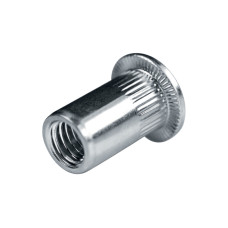
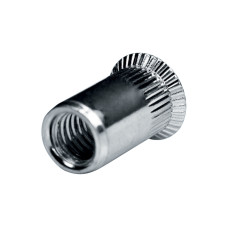
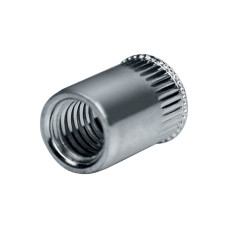
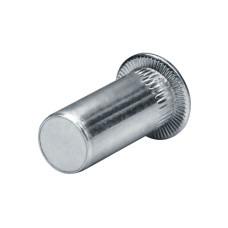
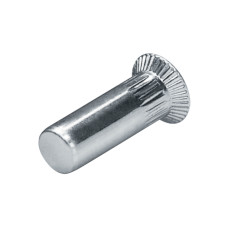
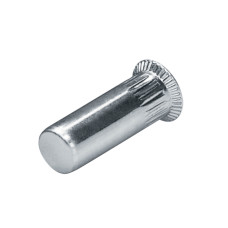
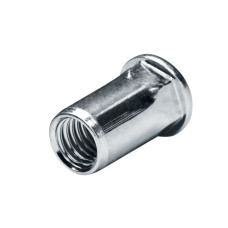
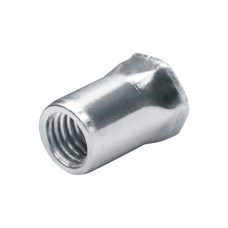
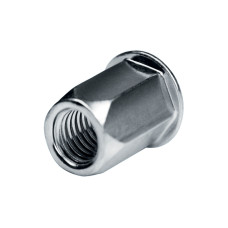
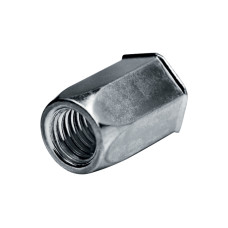
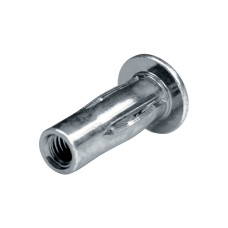
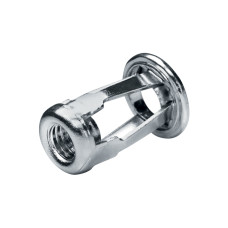
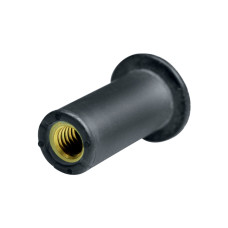
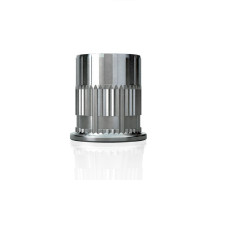
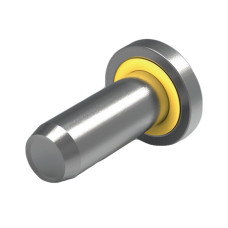
Rivet nuts
Installation process:
To install the rivet nut screw on the mouthpiece of the instrument, and then install it in a pre-prepared hole. At the same time, a collar is formed in the section of the nut. After installation, the mouthpiece is unscrewed from the nut and the workpiece is ready for subsequent assembly.

Threaded rivet nuts materials:
- Threaded rivet / stud - galvanized steel «Steel zinc plated» [AISI 1008]
The advantage of the rivet is "Steel zinc plated": the standard steel rivet.
- Threaded rivet - Stainless steel A2 "Stainless steel A2" [AISI 302]
The advantage of rivet "Stainless steel A2": resistance to corrosion, heat-resistant.
- Threaded rivet - stainless steel A4 "Stainless steel A4" [AISI 316]
The advantage of rivet "Stainless steel A4": resistance to corrosion, heat-resistant, acid-resistant.
- Threaded rivet - aluminum AlMg5 "Aluminum AlMg5" [AISI 5056]
The advantage of rivet "Aluminum AlMg5": low weight, resistance to corrosion.
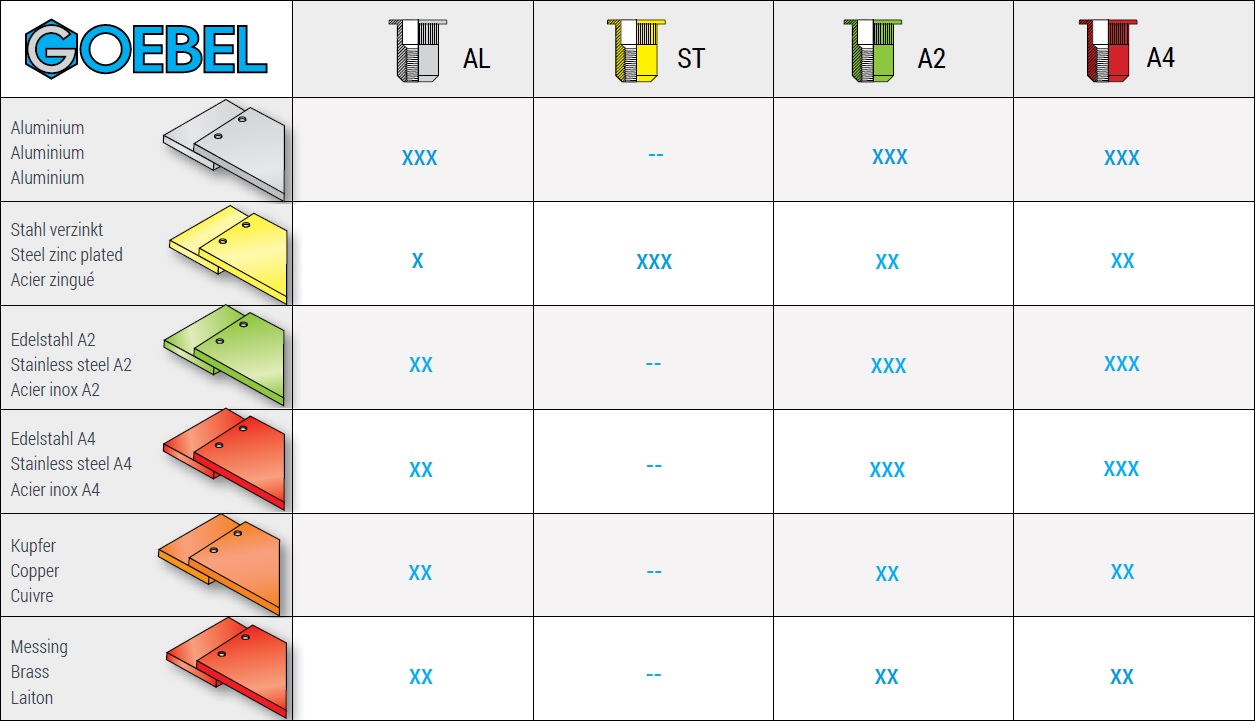
Recommendations for the use of rivets with different materials:
| "ХХХ" - perfect option | "ХХ" - recommended | "Х" - undesirable | "--" - not recommended |
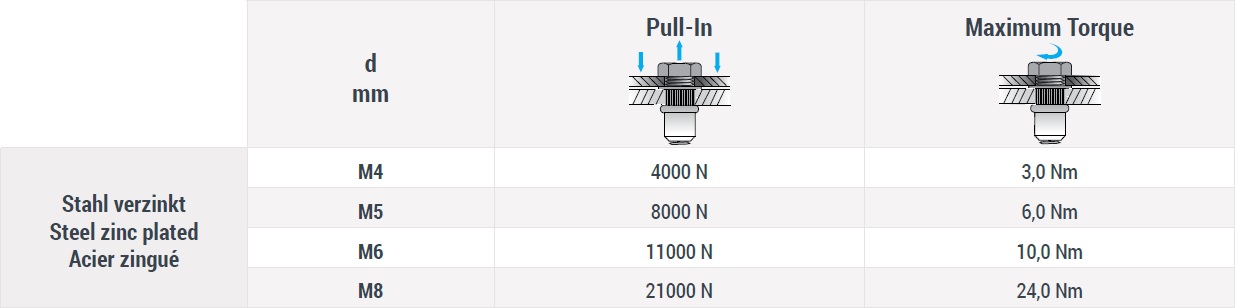
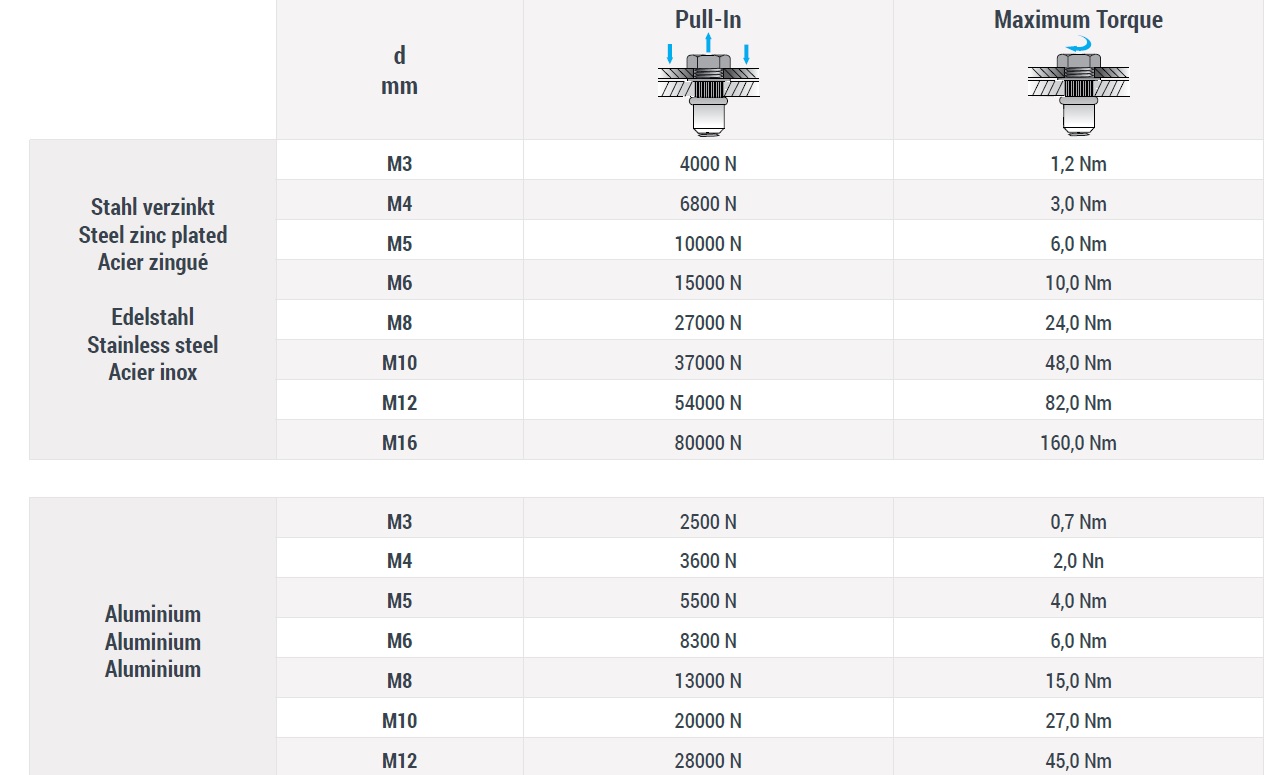
Force / strenght for the rivet nut (material: galvanized "Steel zinc plated", stainless steel "Stainless steel", aluminum "Aluminum") and riveted stud (material: galvanized "Steel zinc plated")"Steel zinc plated"):
- Effort to break the thread N (Pull-In)
- Maximum torque Nm
Rivet nut Go-Nut:
Rivet stud Go-Bolt: